Tuesday, January 26, 2016

The Awakening (1990)

"People have forgotten what life is all about. They've forgotten what it is to be ALIVE," said Leonard.

Few years ago, I watched 'The Pursuit of Happiness', a film inspired by a true story of a single father, Chris Gardner who struggles in life and being homeless for nearly a year with his son. The film reminded me so much about things that I've taken for granted in life. After watching the film, I felt a sense of embarrassment of the way that I've lived. Throughout my life, I have gotten most everything I wanted so easily to the point that I never learn to appreciate them.

'The Awakening' is another brilliant film that reminded us how we have all taken our lives for granted. Being a well-functioning person, it never occur to me how it feels like to not being able to walk, to run, to talk and what's more, to be awake. We go to sleep every night thinking that we will eventually wake up tomorrow. But never have we realized that being able to wake up in the morning and be yourself again is actually a blessing. 


This film is a story about the extraordinary work of a doctor in Bronx Hospital who managed to use a drug, L-Dopa to treat a group catatonic patients. Dr. Malcolm Sayer was a new doctor who came to work at this chronic hospital. Initially, he was not used to these patients and had no hope in treating them at all. But things changed after he met Lucy, a catatonic patient who showed no response, movements or facial expressions but somehow she changed her position each time when Dr. Sayer was not looking. Apparently, she was trying to catch her glasses as they fell. Dr. Sayer then began to experiment on her with a ball which she caught onto quickly and found that she was borrowing the will of the ball in order to move. Soon after this odd encounter, Dr. Sayer found a group of patients with similar disease. They were all patients who were catatonic and suffered from encephalitis lethargica. These are patients who suffered from a horrible fate of being trapped inside their body. Some doctors said that these patients had no consciousness, as if they were dead in their own body. But Dr. Sayer believed the opposite.

When Dr Sayer successfully managed to cure one of the patients, Leonard, Leonard's experiences in the film enlightened us on how life should be lived. The awakening that Leonard had was as if his rebirth after so many years. Leonard's mother has been taking care of him since he was 20 and all these years he never talked to her or did he ever respond to her. But now that he was conscious again, Leonard saw his mother and called out to his mother for the first time after so many years. Although it was heart breaking to see Leonard discovered that he'd lost 30 years of his life to the disease and now that he was awaken, he was no longer the young boy he was, it was also good to see him being optimistic and tried to live his life from the moment. However, Leonard was not the only one accepting the change after the awakening though, his mother was too. It is possible that his mother was still treating him like a child because it seemed like it was hard for her to acknowledge that he no longer needed her by his side all the time.

One of the scenes that made an impression on my thoughts was the scene where Leonard refused to go to bed and sleep. It was as if he was afraid that he would not be able to wake up once he went to sleep. We often take things like this for granted in life but to Leonard, to be able to wake up after being trapped inside his own body for so long, it was indeed a blessing. Similarly with the scene where Leonard told the camera that it felt like a dream but he knew it was not a dream when Dr. Sayer could understand what he said. Simple things like that seemed to be a miracle for patients like Leonard. 

When Leonard had a meeting with the committees of the hospital and he was asked what was it that he wanted, he demanded the simplest thing in life - to have freedom, to be able to take a walk on his own and to live. I could still remember the words that he told Dr. Sayer, "People have forgotten what life is all about. They've forgotten what it is to be alive. They have to be reminded." Leonard had been through life experience in which he could not live normally. Sometimes, it feels as if it takes death to remind you what it feels to be alive. You will never know how good it is to be able to walk until you lose the ability to walk. Similarly, you will never know how good it is to be able to see until you lose your ability to see. 

By the end of the film, Leonard and the other patients began to lose their awakenings. It was rather sad to see the patients returning to their catatonic states as if it was a curse. The feeling of guilt and sorry that Dr. Sayer was feeling for the patient showed that he was a good doctor who tried his best of giving life to his patients (a responsibility which previous doctors have neglected) but unfortunately, lost to the fate decided by God. There was one saying by Dr. Sayer which showed how much he regretted. He told his nurse, "how kind is it to give life, only to take it away." The patients, including Leonard, too was trying their best to battle with their disease. But it was a fight that they were losing. Even though the patients did not have a chance to fully recover, their story had taught us how important it is to value our well-beings and the gift of being able to live as a healthy person.

Thursday, January 14, 2016

Cinema Paradiso (1988)


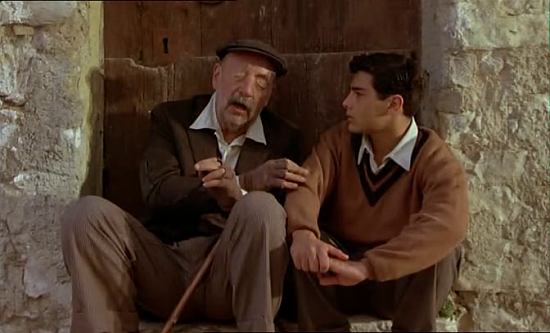
The very first film that I have watched in Psychology of Film - Nuovo Cinema Paradiso, also known as Cinema Paradiso internationally. Personally, I really enjoy watching films but sadly, I have never really given myself enough opportunities to explore foreign language film like this one.

Since it was my first Italian film, not knowing anything about this film at all in advance had given me a fresh feeling - a feeling that was really great because it felt like I was pretty much anticipating all the time what was going to happen next in the film as I did not even know what genre the film was. So, when the film began, I had no clue at all what the film was about. However, as the film progressed, I was taken by the storyline as if I was living with the characters in the movie and grew together with them. Surprisingly, it made me realized that it was similar to our lives in general. We are always living in the present, not knowing what will be happening in the next moment of our lives. The way and the attitude I carried when watching this film had given me the exact same feeling I felt about my life and it felt exciting.


The film started with a scene where an old Italian woman, after 30 years of losing contact with her son was trying to get hold of him in Rome to get him the news of someone's death and funeral - someone named Alfredo. Salvatore Di Vita, a famous Italian film director was the son. When Salvatore knew about the news, he did not immediately call back home. In my mind, I was thinking about how horrible he was to his mother. But as I watched the movie up til the end, I realized that my first impression about him was wrong and I liked how the end of the movie had changed my thoughts. So, what actually happened in the end?


The film showed Salvatore's flashbacks when he was a six-year-old boy, nicknamed Toto. During the entire flashback, we were able to watch Toto's development and how he grew from a young innocent boy with overwhelming passion for films, who befriended a kind and caring projectionist of a cinema, Alfredo, to an adolescent Toto who fell in love with a beautiful girl named Elena. The film resembled the natural episodes of our lives and we could easily relate to the movie. We all went through childhood like Toto, we used to have passions in certain things that we loved and don't we all reminisce the innocent lives we used to live when we were at Toto's age? Then as we grow up, the activities that we used to love doing when we were young would become our dreams because we knew that we could work towards making them into ambitions. It was adorable to see how Toto's love for films since young never ended and he succeeded to become a film director himself.


To be honest, I really enjoyed every moment that Toto spent with Alfredo in the film. Toto would always come up and annoy Alfredo in the projection booth to beg him to let him watch a movie or even asked Alfredo if he could keep the piles of deleted scenes. Even though Toto and Alfredo's relationship started off tensely, they soon became really close to one another and Alfredo became a fatherly figure to Toto. Toto's biological father had gone to war and never came back. His constantly emotional mother would deny the fact that her husband would never return. She also sometimes displaced her anger onto poor Toto. Even though it was sad to see how Toto's mother treated him, I could understand that his mother was somehow in her defence mechanism phases as she was trying to avoid the anxiety resulted from her husband's death.

So maybe that was one the reasons why Toto became very attached to Alfredo, especially when Alfredo had agreed to spend time and to teach him how to operate the film projector. Their relationship, although was not biologically related, was very significant. Toto would even risk his own life to save Alfredo's in a fire. This gave me an insight in which humans do not have to be biologically related to one another to share such special secure attachment. Toto had developed such secure attachment with Alfredo through the many events that they have both been through. 

However, there was a sad part in the film about Alfredo. Initially when Toto wanted to be a projectionist, Alfredo opposed the idea. To him, being a projectionist was rather lonely. All he ever did was to watch the same film over and over again alone up in the projection booth. There was no one to talk to him at all until Toto showed up. This showed how vulnerable humans are and how every single one person seek to belong, as we are all social beings. 


After the fire, Alfredo had lost his eyesight and his job as a projectionist because the cinema was destroyed in the fire. During this part of the film, I was able to feel how upset the villagers were when the cinema was destroyed. I could still remember that someone in the film had mentioned that the cinema was the only entertainment the villagers had. After the war, life seemed so hard and to be able to have a slight entertainment in such a dull village was actually a blessing to them. It was also an interesting sight to see how the cinema had brought everyone together. It was funny to see how everyone in the cinema was so interactive with one another and how much they have enjoyed watching films, especially when the new cinema was opened and those previously censored scenes were no longer censored.


When the audiences conformed with one another as they laughed and cried together in the cinema, I came to a realization that it was so much fun to be like that - to be so collectivist rather than being so individualistic like how most of the people in our society are nowadays. When we were at the cinema nowadays, it was always very quiet because we all liked to enjoy the movie on our own. We didn't even like it when people were reacting loudly to the movie in our cinema. But come to think of it, if we could all be like the audiences in this film, would watching movies in cinema be more enjoyable than it already was?


So, as our Toto grew up to be a pretty good looking teenage boy, his love took a turning point in his life as he was no longer only loved films and Alfredo, he also fell in love with a beautiful young lady, Elena. However, Toto's love life in this film ended with much regret. This reminded me of a script told by a famous Chinese author and film director of the romantic movie, "You Are the Apple of My Eyes". He said that first loves may not always be our last one but they last forever in our memory and have a significant meaning in our life. This pretty much described Toto's first love, Elena. They had many wonderful and romantic memories that they shared with each other. But when Toto returned from his military service, he could no longer find Elena. I thought he would stand a chance with her by the end of the movie but I was wrong. As much as it did not feel good because of this regret, however, this sort of ending somehow wrapped up the film quite beautifully about first loves.


Devastated about Elena, Toto was sort of finding his meaning of life when Alfredo suggested that he should leave this small town to Rome. If Toto was to find his dreams and success, he must leave. The worst feeling was when Alfredo even asked Toto to never look back, to never come back and to forget every one of them. For this, I think I can understand why Alfredo did that. When I was in my first year, I felt homesick all the time when I had to leave home and I could not concentrate in my studies at first. When Alfredo told Toto to cut ties with all of them, maybe he was trying to make Toto leave everything he had behind and start anew because only then Toto would be able to start fresh and be who he wanted to be without having to think about home and have memories tortured him. It may have sounded harsh but he actually meant for Toto's own good. Anyhow, Alfredo had so many memories with Toto. When I watched this scene, I could feel that heaviness in both their hearts and only God knew that that was their last time seeing each other's faces.


Toto, or now known as Salvatore obeyed Alfredo's words and he never came back - which explained why he did not visit his mother for 30 years. My initial impression of him changed after watching this scene. However, he came back for Alfredo's funeral. Even though I was not Salvatore in the film, I felt deeply depressed and regret because for obeying Alfredo's last words, he was not able to visit Alfredo for so many years, after so much that he had done for him and now the only thing Salvatore was seeing was the coffin which held Alfredo's body.

Even so, one of the greatest moments in the film was when Salvatore met everyone else in town. He may not recognize each of them because they have all grown older but the nostalgic feeling when seeing everybody was there. He turned back and he saw Ciccio who gave him a job as projectionist after the rebuilt of the cinema. After so many years away, Toto was now back to where it all started, his home, with everyone whom he knew. Even though that day, the funeral had taken Alfredo away forever, it had given something back to Salvatore somehow. Salvatore was Toto once again.


The film gave me another heart breaking scene when Salvatore returned to Rome and watched the reel given by Alfredo. It was all those deleted kiss scenes that the priest had ordered to be cut out and which Toto had begged Alfredo for because he wanted to collect them but Alfredo refused to give it to him. Alfredo had spliced them all together for Toto. At this moment, it was as if the film had brought us all back to the beginning where it all started, when Toto was a mischievous young boy who annoyed Alfredo all the time. I believed that Salvatore was feeling exactly like how I was feeling because even though he got teary watching the short film, he smiled at the end and the film ended peacefully.